

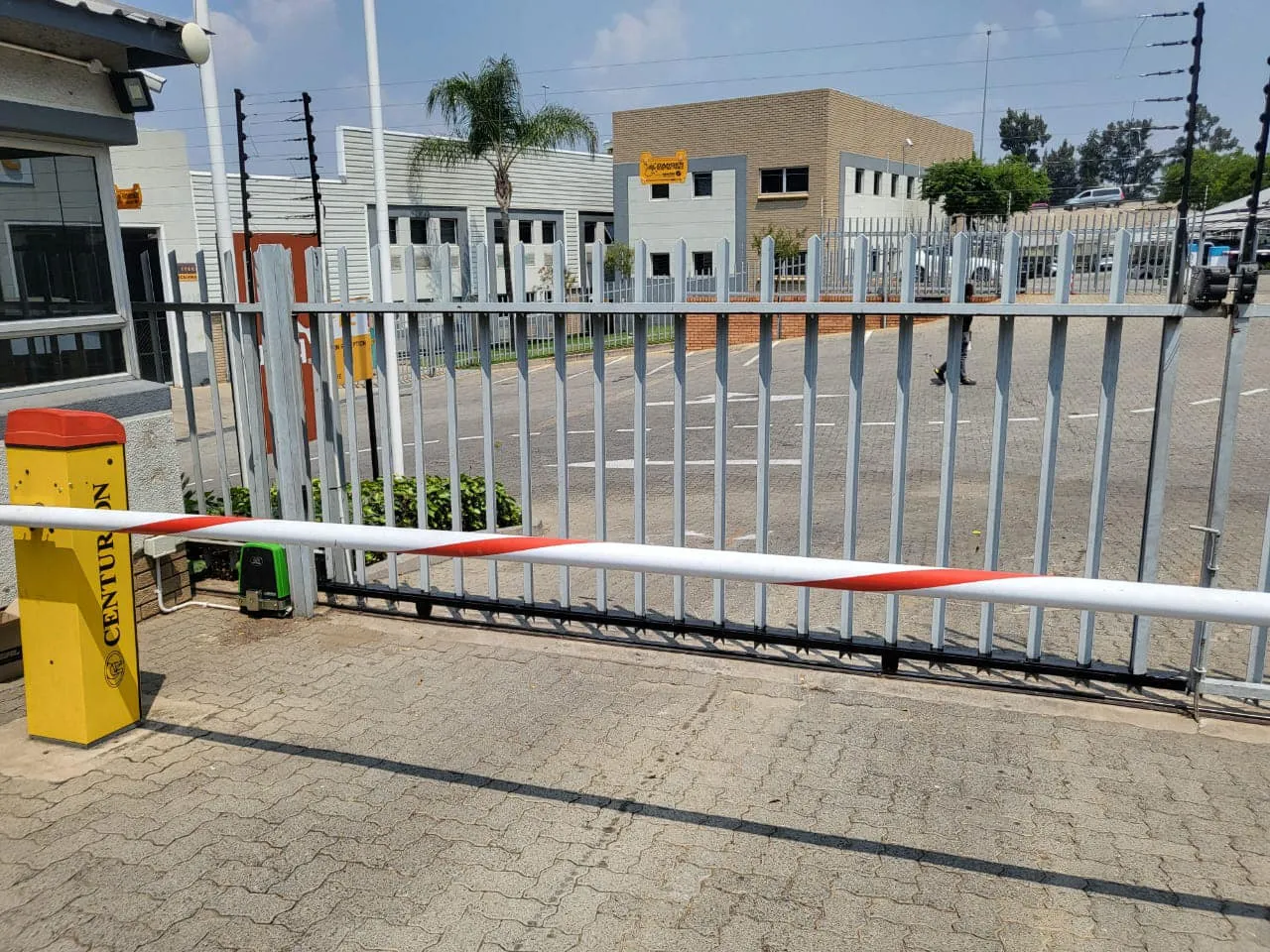
Gate and garage automation is one of those upgrades that every Cape Town homeowner who installs it wonders why they waited so long to get it. The combination of convenience and added security makes it one of the most practical investments for any residential or commercial property. But a gate motor is not just a motor. The quality of your installation determines whether your gate works reliably for years or becomes a source of frustration within months.
Cape Town properties use three main gate types: sliding gates, swing gates, and swing gates with two leaves. Each requires a specific type of motor.
Sliding gate motors are the most common in Cape Town. They run along a track and require a correctly weighted and balanced gate to operate smoothly. The weight of the gate is a critical factor in motor selection. An undersized motor on a heavy gate will burn out prematurely. A correctly specified motor on a well-balanced gate will run reliably for years with minimal maintenance.
Swing gate motors work on a single-leaf or dual-leaf swing gate. They require adequate space for the gate to open inward or outward, and the motor arm length must suit the gate dimensions. Dual-leaf setups need two motors that are synchronised for smooth simultaneous operation.
Before you select a motor, an experienced installer will check your gate type, gate weight, track or hinge condition, and the available power supply at your gate.
Roller garage doors and sectional overhead doors are the most common types of automated garage doors in Cape Town residential properties. The automation mechanism attaches to the door and operates via a remote control, a wall-mounted button, or integration with an access control system.
Key factors for garage automation include door balance, spring tension, and available head clearance for the motor rail. A door that is manually difficult to lift will put excessive strain on the motor. A professional installer identifies and resolves these issues before the motor is fitted, not after.


This is where gate and garage automation delivers its real value in terms of security. A standalone automated gate that opens on any remote is a convenience tool. An automated gate integrated with your access control and intercom system is a security asset.
Integration options include pairing your gate motor with an RF ID tag reader or biometric reader so that only authorised users open the gate. Intercom systems linked to the gate motor allow you to see and speak to a visitor before granting entry. You press a button on your intercom handset or smartphone app to open the gate without leaving the house. CCTV cameras positioned at the gate capture clear footage of every vehicle and person that enters. Alarm systems set to trigger if the gate is forced open or tampered with add a further layer of protection.
This level of integration turns your gate from an entry point into a controlled checkpoint
The South African market for gate motors is large, and the range of quality is wide. Brands like CENTURION Systems, Hansa, BFT, and CAME are trusted in the local market and widely used in installations across Cape Town. Each brand offers different motor grades suited to different gate weights, usage frequencies, and budgets.
Key specifications to consider include motor duty cycle (how many operations per hour it handles before needing to rest), battery backup for use during load shedding, obstacle detection for safety, and the quality of the remote control system. In a city where load shedding has been a consistent reality, battery backup on your gate motor is not optional. It is essential.
Common Problems With Poorly Installed Gate Automation
The most common complaints about gate motors in Cape Town stem from incorrect motor sizing, gates that were not properly balanced before installation, and low-quality motors installed at the lowest possible price point.
A motor that is too small for the gate will heat up, slow down, and eventually fail. An unbalanced gate will place excessive load on the motor arm and wear out the mechanism prematurely. A cheap motor from an unknown supplier will often fail within its first year, requiring replacement at a cost that would have covered a quality motor in the first place.
Professional installation by an experienced team means your motor is correctly specified, your gate is properly assessed and prepared, and your system is thoroughly tested before the job is signed off.
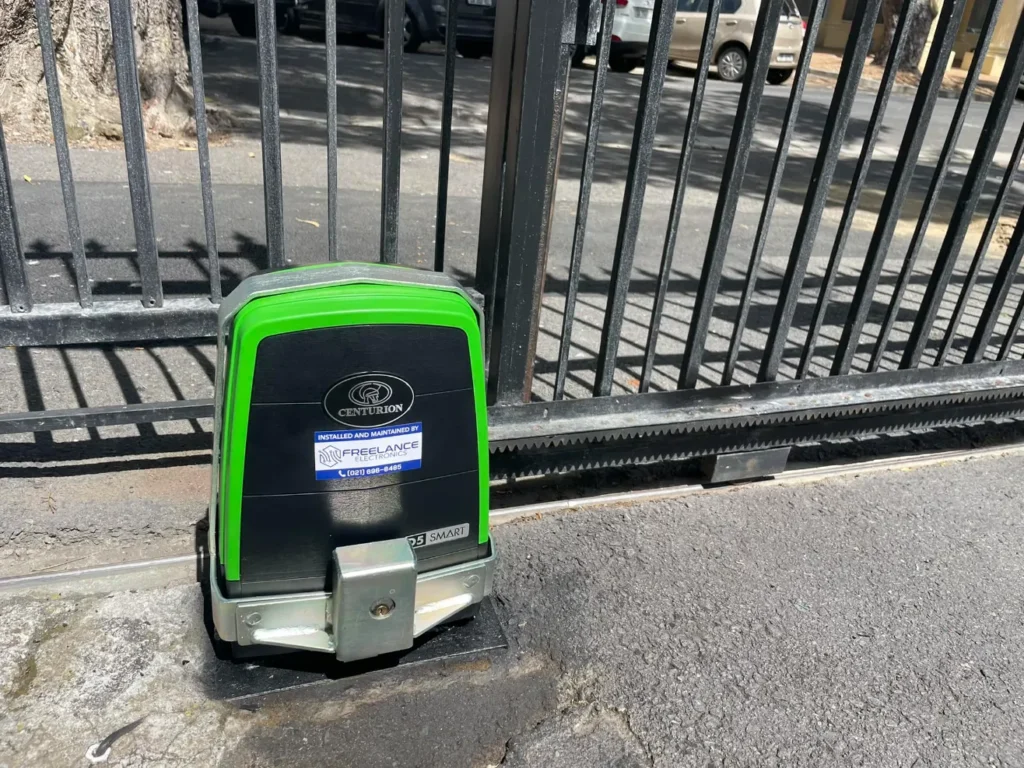
A quality gate automation installation includes a complete system test, a full handover that shows you how to use every function, and access to technical support when you need it. Remote controls are programmed, safety beams are set, and obstacle detection is tested before the installer leaves your property.
Freelance Electronics has been installing and maintaining gate and garage automation across Cape Town for over 13 years. The team works with trusted motor brands, correctly specifies every installation, and provides 24/7 technical support after the job is done.
